


Young Sheldon’s Iain Armitage Addresses Claims He Was ‘Difficult’ on Set in Book Excerpt
Young Sheldon’s Iain Armitage Addresses Claims He Was ‘Difficult’ on Set in Book Excerpt

Yana GrebenyukFri, October 9, 2026 at 1:00 PM UTC
3
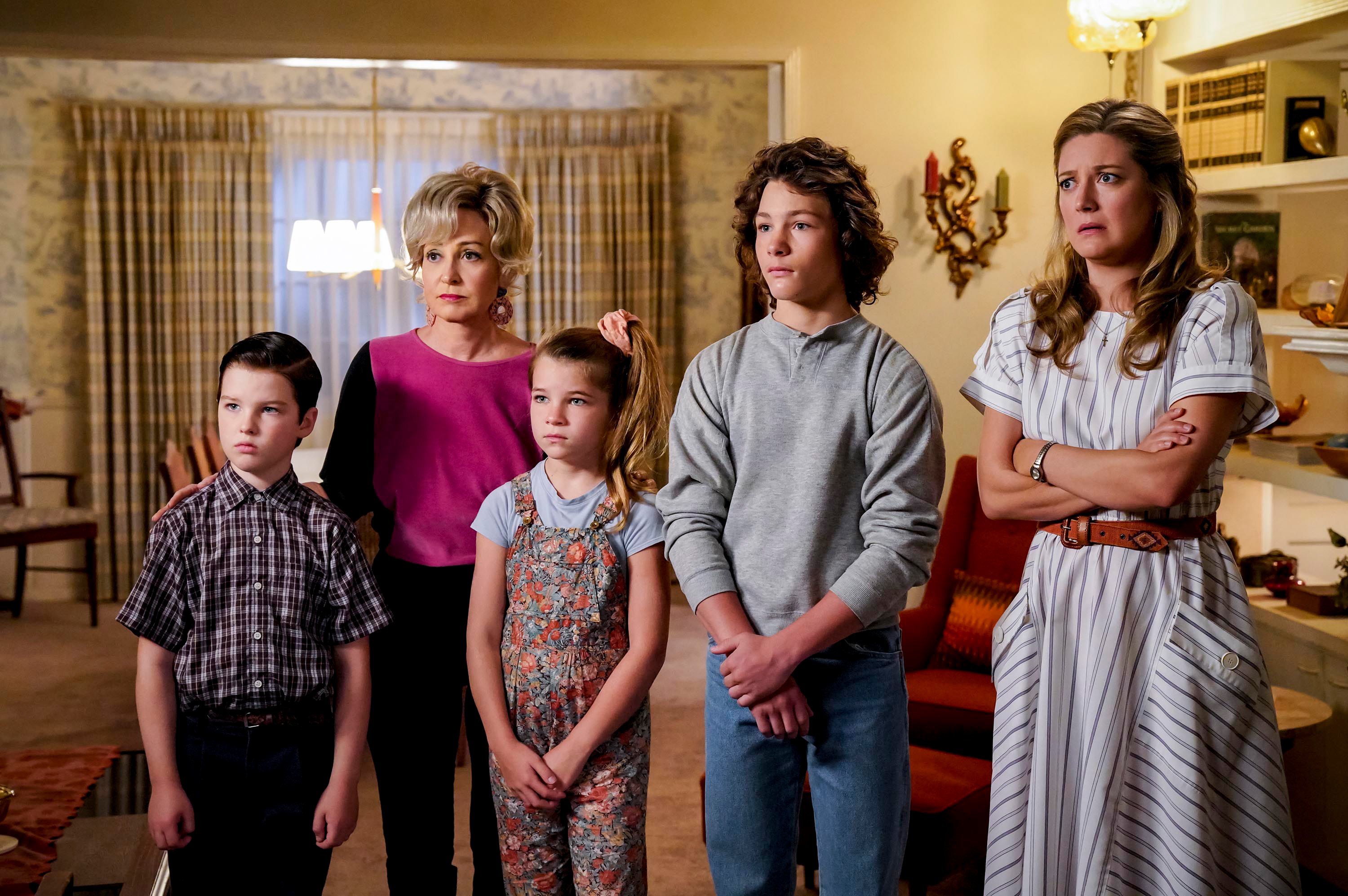
Bill Inoshita / ©CBS / courtesy Everett CollectionIn a new book excerpt, the cast of Young Sheldon recalled the challenges they faced amongst themselves off screen, including claims Iain Armitage was “difficult” on set. Jessica Radloff’s Young Sheldon: The (Juicier-Than-Meemaw’s-Brisket) Inside Story of the Hit Comedy, out October 20, is an oral history of The Big Bang Theory prequel centered on Sheldon
In a new book excerpt, the cast of Young Sheldon recalled the challenges they faced amongst themselves off screen, including claims Iain Armitage was “difficult” on set.
Jessica Radloff’s Young Sheldon: The (Juicier-Than-Meemaw’s-Brisket) Inside Story of the Hit Comedy, out October 20, is an oral history of The Big Bang Theory prequel centered on Sheldon (played by Jim Parsons and Armitage).
After finding success at CBS, the cast bonded behind the scenes, but there was still the occasional moment of tension. In Us’ exclusive excerpt from the upcoming book, the adults discussed their approach to supporting the child stars while maintaining some sense of discipline. There is also mention of Armitage’s behavior on set — and his response — as well as insight into his ups and downs with onscreen sister Raegan Revord.
Keep scrolling for more from Young Sheldon: The (Juicier-Than-Meemaw’s-Brisket) Inside Story of the Hit Comedy:
How Many Shows Are There in ‘The Big Bang Theory’ TV Universe? Breaking Down Every Spinoff
“It was a family in the truest sense” is a phrase that comes up a lot on TV sets. Casts are quick to point out that everyone loves each other, and that their set is a truly happy place. It’s not that that kind of sentiment isn’t true, but it’s important to remember that (1) even the best families rarely always get along and (2) it’s still a work environment. Would most people refer to their own colleagues as a family? And perhaps most importantly, why are actors on a TV show held to a different standard?
This was especially true in the case of Young Sheldon, where they’re playing a fictional family. And this fictional family certainly does not see eye-to-eye. But they all do love each other, no matter how many times Sheldon annoys Missy, or Meemaw insults George. The same was — and is — true of the Young Sheldon cast. They loved each other (and still do), but that doesn’t mean they always got along. Relationships could get complicated, and there were times where certain bonds were stronger than others. In the two-plus years since the show ended, some relationships remain as if the show never ended; others have cooled because of physical distance and life. But there’s no denying that this cast still shows up for each other, and that wouldn’t be the case if they didn’t genuinely care. Perhaps most refreshing is that they humanize what it means “to be a family,” and the messiness and joy that comes from working long hours, abiding by strict child labor laws, and providing a safe and healthy environment for young kids who grew up before everyone’s eyes.
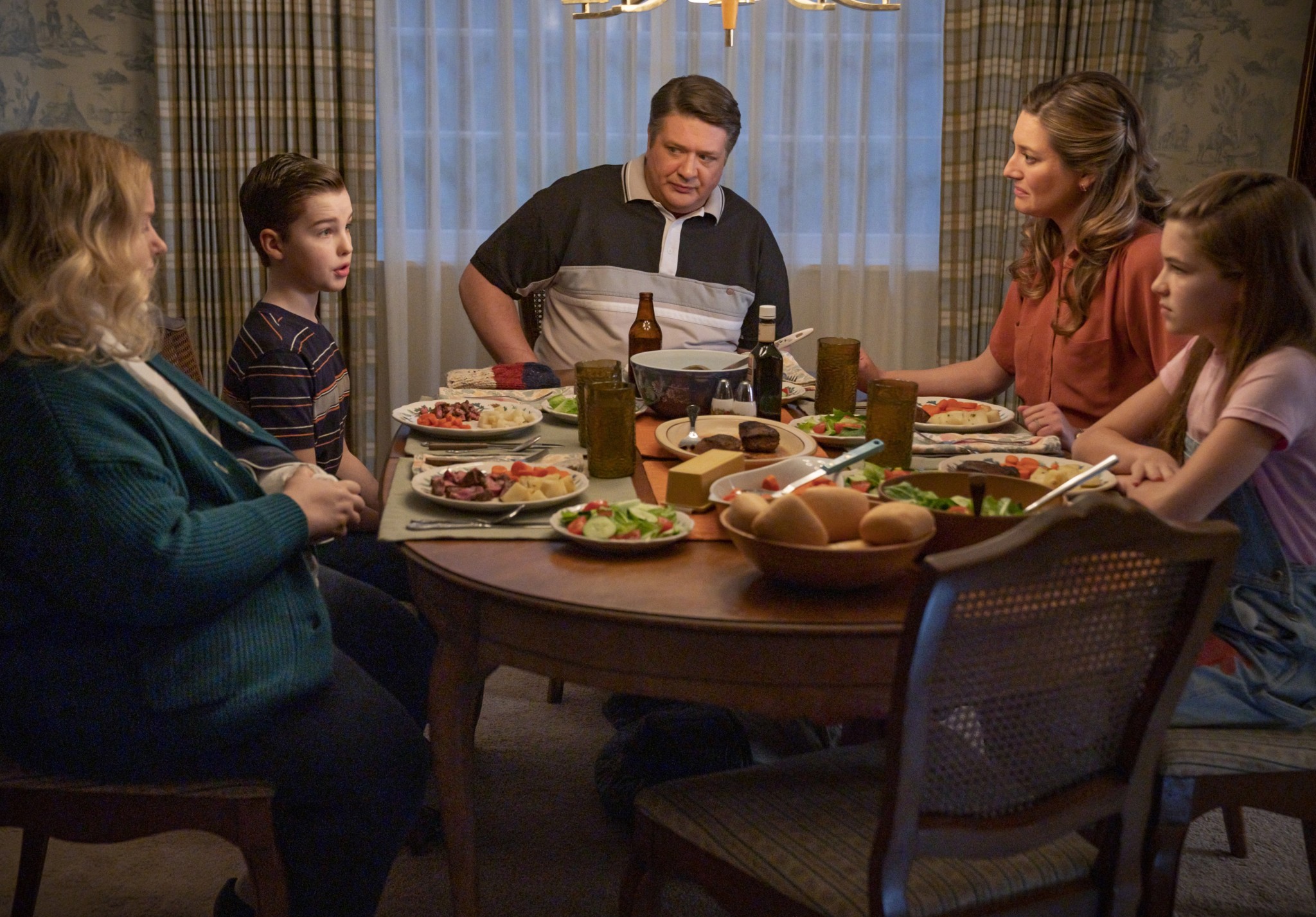
Nicole Wilder-Shattuck / ©CBS / Courtesy Everett Collection
…
Emily Osment: I was their age when I was on a show [Hannah Montana] and it’s tough. You have no idea how tough it is to be in school and also be at work. It’s a lot to juggle, so I have a lot of empathy for that. Iain and Raegan would finish a dinner scene and just get carted off to school. There’s no break.
Annie Potts: It’s a weird life for a kid because they’re working like adults, and it’s expected that they behave as much as possible like adults. They’d be tired or cranky, or I could tell they just needed to run and burn some energy off. I always gave out whoopie cushions because it allowed kids to be a little naughty in a surprising way, like, “Did you just do that?” [Laughs] And in the early years, it was nice to be like a family off set, too. Every once in a while, if the parents weren’t right there, it was, “Hey, you need to stop doing that.” And if you have a familial relationship with them, it doesn’t hurt their feelings so much. But I especially had a little gravity for them, like, “Annie doesn’t want us to do this.”
Steve Holland: Sometimes they’d be bouncing around and you’re trying to give a note, but they’ve moved on to doing something else. And as some of the actors will tell you, that energy could be a lot. So you always have to try to find that line where they’re kids, and you want them to be kids, but you also have a job to do and a limited amount of hours to do it in.
Advertisement
Lance Barber: I think the moms were mostly happy with all our relationships with the kids and gave us freedom to be honest with them in regards to what we needed as professionals. But occasionally, they had to be shut down.
Annie Potts: Here’s the thing . . . we were all working for Iain. We were all serving him. The characters were meant to serve his journey, so that is a lot for a little person to manage psychologically. He was asked to work and carry the weight of something that would be difficult for an adult, and we know that a lot of behavior comes out in situations like that. Yes, sometimes he was difficult. But I’ve worked with grown-ups who were a lot worse. Sometimes I think he was tired, and sometimes I think he pushed people, and people were kissing his ass! It’s a very challenging situation to be 9 years old and be expected to work, behave, and think like a grown-up. And I say that with absolute love and respect.
Iain Armitage: It was a complete privilege to be on this show and play this character, but yes, it was a big undertaking for an 8-year-old. I always did the best that I could, and sometimes kids are not perfect. I was grateful to the people who understood that and gave me grace.
Wallace Shawn: I always found Iain an enchanting person from the earliest days. I love him. He changed enormously over the years because he was very manic at first. He was wild. And you couldn’t sit down and have a conversation with him. He would be running around, almost the absolute opposite of the character that he played, who was so self-contained and sober. And Iain himself was never contained. He was literally running around the set in circles, and with a frightening amount of energy. [But] as the years passed, he evolved into a very graceful, staggeringly well-mannered person. He’s become very, very dignified.
Jason Alexander: Iain is sort of the uber version of what I learned working with kids. He fires on a maturity level and an intellectual level that is beyond anybody else for his age, and you have to respect both at the same time. If you make the mistake of treating him completely not as a kid, he’s not going to enjoy the experience with you, and you’re going to get shell-shocked when he suddenly is a kid, and he’s goofing around between takes, and you’re going, “Wait a minute. What are you doing?” Conversely, if you think of him as a kid, he’s going to feel your lack of respect for him, as a working person. He won’t be disrespectful and he won’t act badly, but he also does not have the skills to engage as much as he does if he’s fully enjoying the person he’s working with. So that was a lovely little dance of going, “Let’s play! Let’s have some fun! Let’s do this! I’m gonna do a silly move! And what do you want to do?” And that became our playtime. He and I clicked really nicely, really fast. And he’s number one on the call sheet, and that has its own responsibilities, weights, concerns, problems.
‘Young Sheldon’ Cast: Then and Now
Alex Reid: Iain wasn’t always comfortable talking about whatever he was really feeling or something, so he just put out this smoke screen of a million words and ideas and thoughts and impressions and accents and jokes, or whatever. There’s a picture of me standing with him next to the Young Sheldon plaque on the stage, and that was after probably our worst run-in with each other. We were doing a scene, and it would not surprise me if Iain didn’t know he was on camera at this specific shot because he kind of wasn’t playing it like he was acting. I went in there and said, “Iain, you’re on camera, so you got to give it your all.” And he took that as “I’m not giving it my all?” He was pissed that I had implied he wasn’t giving it his all, and kept saying, “Well, let’s go again because I need to give it my all.” And when it was over, I went over and I apologized to him, and I said, “That was a terrible choice of words on my part, and I apologize. I was just trying to protect you because you were on camera, and I wasn’t sure if you knew it or not.” So it was all lovey-dovey, and then I asked him if he’d go out and take a picture with me.
Steve Holland: Raegan and Iain were only children who were thrust into this very strange atmosphere. They’re also incredibly different people; they couldn’t be more different. So, they would play and they would fight in a very sibling way, and I think they probably grew more apart as they got older just because they’re such different people. Raegan is outgoing but I think in some ways Raegan’s more of an introvert than Iain. Raegan’s goofy and funny, and Iain can also be goofy and funny but is much more cerebral and likes to talk about things he’s interested in. If he’s working on Russian, he wants to come up and talk to you in Russian. He’s a little Sheldon-like in that way. Raegan is very bookish. Loves to read and loves to play games. But when they were younger, there was more of a sibling dynamic because they were around each other all the time and no one else. Montana was a little older, so it was different for him, but Montana had a very big-brother vibe. He was really sweet to both of them, and was someone they both looked up to. The three of them really did have this very family dynamic.
Tim Marx: There were times when they were getting along famously, and there were times when they were rubbing each other the wrong way. It was very, very real. Montana kind of floated above that a little bit.
Raegan Revord: We definitely were going through the same experience, being 9 years old, growing up in the public eye, and it was such a sudden thing. People can tell you how it’s going to be, but you don’t know until you’re in it. I have people who don’t understand why I’m not forever 10, and I’m like, “There’s this cool thing called time, and I’m not the character from the screen that you saw when they were 10.” And that’s really rare for similar people who are going through that. So it was nice to have someone who understood that process. But like siblings, you bicker and stuff happens. If you spend 12 hours, five days a week on a set, there’s going to be arguments, and people are going to have clashing opinions.
Iain Armitage: Raegan was so much fun to have as a sibling. It definitely did feel like a sibling relationship, and Rae was kind of the only other person on set who understood exactly what we went through, from being on set to going to school. And I have such mad respect for Rae, doing such cool stuff from writing books to Twitch to acting. And I like to say Zoe and Lance and Annie were so good at their jobs, it felt like such a real family. Still, sometimes families can annoy each other, mostly because they just know each other so well.
Source: “AOL Entertainment”
