


Inflation cooled off as expected in July
Inflation cooled off as expected in July
Madison Hoff Wed, August 12, 2026 at 12:57 PM UTC
0

The Bureau of Labor Statistics published new consumer price index data.Allison Joyce/Bloomberg via Getty Images -
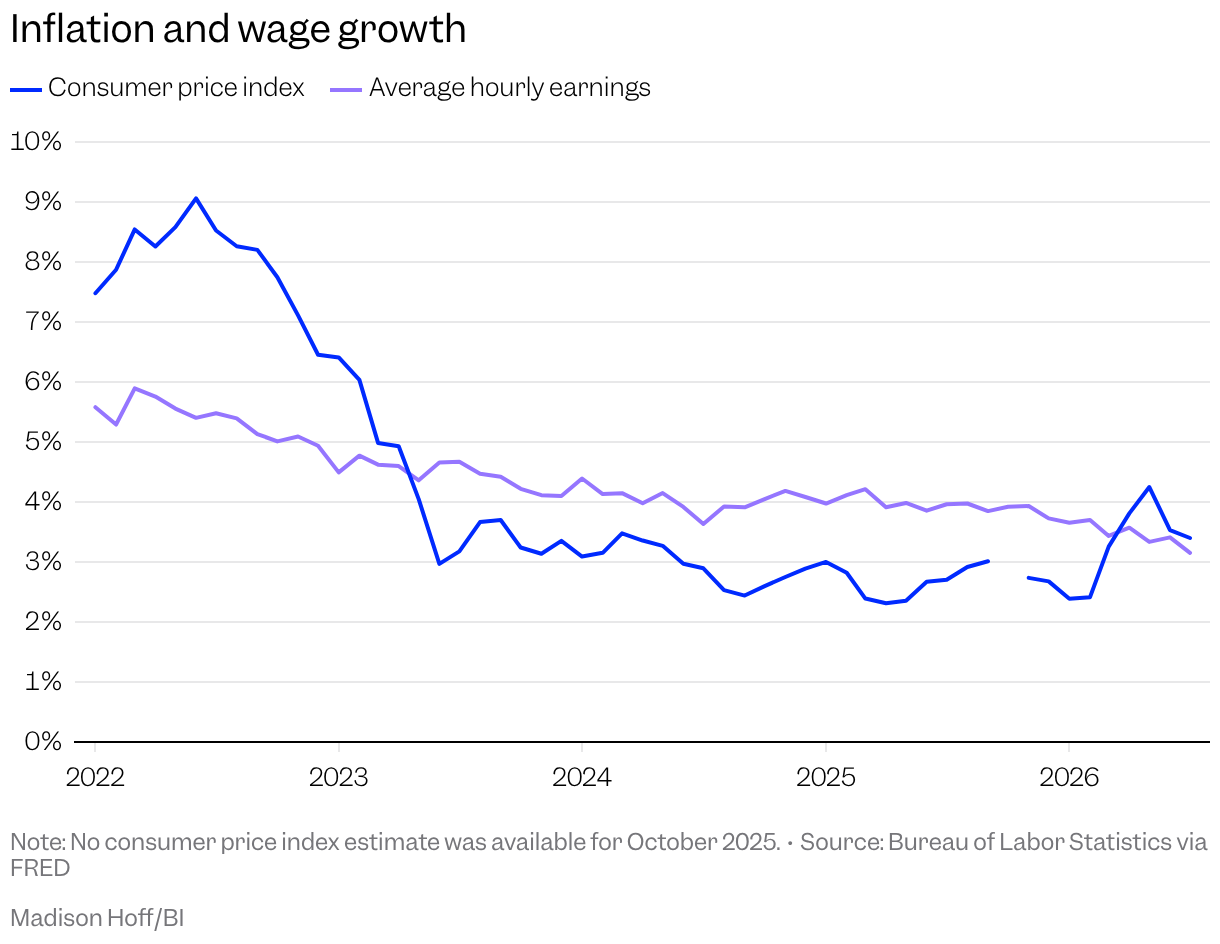
US inflation cooled off in July, with consumer prices rising 3.4% over the year.
That matched economists' expectations, and wage growth still fell short.
There will be another CPI report before the Fed meets again to decide on interest rates.
US annual inflation cooled for the second consecutive month, falling from 3.5% to 3.4% in July, as expected.
That means inflation outpaced wage growth for the fourth straight month. Wage growth slowed to 3.2% over the year in July, the lowest increase since 2021.
"Even if you're making more money numbers-wise, with the way prices are rising, you have less money left over at the end of the month," ZipRecruiter economist Nicole Bachaud told Business Insider. "That's really going to impact the large consumer base of America, middle- and low-income households, who are really dependent on wage growth to help them remain economically viable."
CPI increased 0.1% over the month as expected following June's 0.4% month-over-month decline. Core CPI, which excludes volatile energy and food prices, rose 0.2% over the month as expected after being flat in June. Core CPI increased 2.5% over the year, below the previous 2.6% but matching the forecast.
"The July CPI release presented a mixed inflation picture, with headline inflation reflecting the impact of higher energy prices while core inflation continued to moderate, albeit gradually," Ryan Weldon, investment director and portfolio manager at IFM Investors, said in commentary. "The Fed will likely look through volatility in headline inflation and focus on easing core services inflation as justification for remaining on hold in September."
Energy was a big category to watch in today's report as the Iran war and its effects on the oil market continue. Growth in the energy index cooled to a year-over-year rate of 14.7% after June's 15.7% and May's 23.5% peak. The energy index fell again over the month, but not as much as in June, at 1.5% and 5.7%, respectively.
Advertisement
Food price increases looked similar to June; food away from home rose 3.4% year over year again, and food at home rose 2.7% again. Overall food prices increased 3%, like they did in June.
"Forces eroding inflation include rising rental vacancy rates that are restraining rent growth, a less onerous tariff regime than a year ago and moderating wage gains," David Kelly, chief global strategist at J.P. Morgan Asset Management, said in commentary before the new Bureau of Labor Statistics report. "However, the pace at which inflation declines depends on how long it takes to return to normal traffic through the Strait of Hormuz."
The new price data comes after Friday's dismal jobs report, which showed the US shed jobs in July. Downward revisions showed around 100,000 fewer jobs were created over the previous two months than was previously reported. Unemployment and overall labor force participation dropped, while prime-age labor force participation ticked up.
Cory Stahle, senior economist at the Indeed Hiring Lab, said several data sources showing anemic wage growth and weak hiring together indicate that employers aren't "necessarily pulling out the stops to try to attract workers" because there isn't pressure to do so. He added that companies may be prioritizing health benefits over wage increases.
There will be another CPI report out before the Federal Open Market Committee meets in mid-September to determine what to do next with interest rates. Markets aren't sure what the Fed will do next. CME FedWatch showed a slightly better than even chance of another interest rate hold at the central bank's next meeting in September, and a slightly less than even chance of a hike.
"With another round of inflation data due before the September FOMC meeting, it remains all to play for, but today's in-line report was a good start," Lindsay Rosner, head of multi-sector fixed income investing at Goldman Sachs Asset Management, said in commentary. "Contained core inflation adds to the encouraging signs in last month's release of a moderation in underlying inflation, helping strengthen the case for a September hold."
If you enjoyed this story, be sure to follow Business Insider on Yahoo.
Source: “AOL Money”
